Turkey Residence Permit: Your 2026 Application & Renewal Guide
Short answer
A residence permit (ikamet izni) lets a foreign national live in Turkey for longer than a visa or visa-free stay allows. The Presidency of Migration Management (Göç İdaresi Başkanlığı) handles applications through its e-İkamet portal and provincial offices. This guide explains who needs a permit, which type fits you, what to prepare, what happens at the appointment and afterwards, and how to renew. Fees and amounts are as of November 2026.
What a residence permit is and who needs one
Visitors with a visa, or from visa-exempt countries, can stay at most 90 days in any 180-day period. To stay longer, you need a residence permit. Staying without one can lead to fines, deportation and an entry ban. The permit card is also your proof of legal residence when you open a bank account, sign utility contracts or deal with other offices.
Some people do not need a separate residence permit:
- Visa holders and visa-exempt visitors, for the period of their visa or exemption.
- Holders of a stateless person identity document.
- Diplomatic and consular officers and their families, as notified by the Ministry of Foreign Affairs.
- Staff of international organisations whose status is set by an agreement.
- People exempted by an international agreement.
- Blue Card holders.
- Holders of an international protection document.
A valid work permit, or a work permit exemption certificate, counts as a residence permit, so you do not need both. If your exemption ends, you must apply for a residence permit within 10 days.
A residence permit does not give you the right to work. To work in Turkey you need a work permit; see our work permit guide.
Types of residence permits and how long they last
Choose the type that matches the real reason for your stay. The periods below are the maximums in Law No. 6458. The office can grant a shorter period, and your passport must be valid for at least 60 days beyond the permit you request.
| Permit type | Who it is for | Maximum length each time |
|---|---|---|
| Short-term | Tourism, property owners, business links, scientific research, Turkish courses, medical treatment and other listed purposes | Up to 2 years; up to 5 years for qualifying investors and TRNC citizens |
| Family | Spouse, minor children and dependent adult children of a Turkish citizen or a foreign resident | Up to 3 years, never longer than the sponsor's permit |
| Student | Students in Turkish higher education | The length of the study programme |
| Long-term | Foreigners with 8 years of uninterrupted residence permits | Indefinite |
| Humanitarian | Special cases, for example when a person cannot be sent back | Decided case by case |
| Victim of human trafficking | People identified as possible victims | 30 days, extendable by 6 months at a time, up to 3 years in total |
Some limits apply within the short-term type. A permit for a Turkish language course can be granted at most twice. Graduates of Turkish universities can get one short-term permit of up to 1 year if they apply within 6 months of graduating.
There is no official rule that a first touristic permit lasts only 6 months. Agencies report that offices often grant shorter periods than requested, so ask for a period you can support with your insurance, funds and plans.
For a long-term permit you need 8 years of uninterrupted residence permits, no social assistance in the last 3 years, sufficient and regular income, valid health insurance and no public-order concerns. Time on a student permit counts at half.
Residence permit through property
Owning a home in Turkey is one of the purposes for a short-term permit. As of November 2026, the e-İkamet document list sets these conditions:
- The property is worth at least USD 200,000, calculated in Turkish lira on the date you acquired it. The same amount applies in every city.
- It is a home that you live in. A home rented out to others, or a commercial unit, does not qualify.
- First applications need a numarataj document (official address number). Renewals need a tapu devam belgesi, which confirms the title deed is still in your name.
Owners who bought before 16 October 2023 have reported that the older, lower thresholds still apply to them. We could not confirm this in an official text, so check with the migration office before you rely on it. For details, see residence permit through property investment.
Before you apply
Prepare these items before you open the online form. Missing one usually means delays or a request for more documents.
1. Turkish tax number (vergi numarası)
You need a tax number to pay the permit fees and open a bank account. There are two ways to get one:
- Online: Go to the Interactive Tax Office at ivd.gib.gov.tr and open the "APPLICATION FOR NON-CITIZEN'S POTENTIAL TAX NUMBER" section. Fill in the form and upload a clear scan of your passport photo page. The system usually produces a PDF with your tax number straight away.
- In person: Visit any tax office (vergi dairesi) with your original passport and a good photocopy. You can say: "Vergi numarası başvurusu yapmak isterim" (I would like to apply for a tax number). Staff will help you write a short petition (dilekçe). Writing your father's name, mother's name, Turkish address, e-mail and phone number on the passport copy speeds up data entry.
If you already hold a residence permit, you use your foreigner ID number (it starts with 99) instead.
2. Health insurance
Most applicants need health insurance that covers the whole permit period. The exceptions:
- Applicants under 18 or over 65 are not obliged to have it for short-term and student permits.
- For family permits, the sponsor must insure every family member.
- For long-term permits, applicants over 65 only need a document showing that they could not get insurance.
Private policies must meet the minimum cover set by the insurance regulator SEDDK (circular 2024/34, in force since 1 April 2025):
| Cover | Minimum |
|---|---|
| Outpatient | 15,000 TL a year, with 20% co-payment at contracted providers and 40% at non-contracted ones |
| Inpatient, contracted providers | Unlimited |
| Inpatient, non-contracted providers | 150,000 TL, with 20% co-payment |
| Inpatient, 20 listed state hospitals | 250,000 TL |
Prices depend on your age and the insurer, so compare policies. SimplyTR can arrange a policy that meets these minimums; see our guide to health insurance for foreigners.
3. An address
You need a real address in Turkey where the authorities can reach you.
- Renting: Have the rental contract notarised. The landlord normally comes to the notary with their ID, the title deed (tapu) and a numarataj document, which confirms the official address and building number.
- Staying with someone: If your name is not on the lease, the leaseholder signs a notarised undertaking (taahhütname) confirming that you live with them. If the leaseholder is a foreigner, they also provide a notarised translation of their passport and their valid residence permit. Expect the office not to grant you a permit that runs longer than your host's.
- Owning: Bring your title deed; see the property section above.
Address registration. If this is your first permit, register your address with the population office (nüfus müdürlüğü) within 20 working days after you receive the permit. If you are renewing or transferring, your address must already be registered, and you bring a residence certificate (Yerleşim Yeri Belgesi), which you can download from e-Devlet.
Closed neighbourhoods. From 2022 some neighbourhoods were closed to new residence registrations. Reports in June 2026 said this was lifted, but we could not find an official Göç İdaresi notice. e-İkamet shows whether your address is accepted when you apply, so check before you sign a long lease.
4. UETS address (renewals and transfers)
If you are renewing a permit or transferring to a different permit type, the e-İkamet document list asks for a UETS document. UETS is the National Electronic Notification System, which the state uses to serve official notices electronically. Register at a PTT (post office) branch with your passport, a Turkish mobile number and an e-mail address, and bring the UETS document to your appointment. Applicants under 18 are exempt, and first applications do not need it.
Applying on e-İkamet
You apply on the e-İkamet portal while you are in Turkey, before your visa or visa-free period ends. Use only the official portal; third-party sites often charge extra or give wrong information. A permit can also be requested from a Turkish consulate before you travel.
Biometric photos
You need biometric photos taken within the last six months that meet ICAO standards: plain white background, neutral expression, looking straight at the camera. At a photo studio, ask for "biyometrik vesikalık". Bring four printed copies and keep a digital JPEG (usually under 1 MB) to upload. The digital photo should be the same as the printed ones.
Filling in the form
The portal works best on a desktop computer. Follow these steps:
- Choose first application, renewal (extension) or transfer to another permit type.
- Enter your personal details exactly as they appear in your passport.
- Upload your photo and enter your insurance details (policy number, company and end date).
- Submit the form. The system creates a PDF application form. Save and print it straight away, then sign it; it can be hard to open again later.
- The portal gives you an appointment date, time and office. In Istanbul and Antalya the wait can be long, so plan around it.
Financial means
You must show that you can support yourself during your stay without relying on the state. The rules as of November 2026:
- The regulation: Your own written statement is normally enough. If the office asks for proof, a single applicant needs at least the net minimum wage per month. For a family, the total must be at least one net minimum wage, with at least one third of the minimum wage for each family member. A guarantee from another person is not accepted on its own.
- The e-İkamet list for touristic permits: At least 1.5 times the net minimum wage per month for one person, and one net minimum wage per family member for a family. With the 2026 net minimum wage of 28,075.50 TL, 1.5 times is about 42,113 TL a month. The income should be regular, which the list defines as covering the last 3 months.
In practice, bring evidence even if a statement may be enough. A Turkish bank statement (hesap dökümü) covering at least the last three months is the most common proof. Ask the bank teller: "Kaşeleyebilir misiniz?" (Can you stamp it?). An unstamped printout may be rejected. Pension or salary documents can also show regular income.
Fees
You pay two official amounts, plus any notary and translation costs:
| Fee | Amount (2026) | Notes |
|---|---|---|
| Residence card fee | 964 TL | Same for all nationalities |
| Residence permit fee (harç) | Depends on your nationality and the length of the permit | e-İkamet calculates it for you. Students at Turkish schools and universities pay no harç. |
| Notary and translation | Varies | Paid at the notary; ask for a quote first |
The harç is set by reciprocity, so citizens of different countries pay different amounts. You can pay by card on e-İkamet, or at a tax office or a bank that collects the fees, such as Ziraat Bank. At a bank, tell the teller "İkamet harcı yatırmak istiyorum" for the permit fee and "Kart bedelini de yatırmak istiyorum" for the card fee. Keep both original receipts for your file. Full tables are in our residence permit fees guide.
The appointment day
Go to the migration office on your assigned date and arrive about 30 minutes early. Security checks your appointment paper at the entrance.
- Document check: An officer goes through your file. Arrange your papers in the order of the checklist below; many applicants use a plastic folder, and in Istanbul a pink one is common. Staff may speak only Turkish.
- Biometrics: Your fingerprints and photo are taken, usually at your first application. Children under 12 are not fingerprinted.
- Questions: The officer may ask about the purpose of your stay, your work or your plans.
- Family applications: Every family member in the application, children included, should attend.
- Lawyers: A lawyer with a notarised power of attorney (vekâletname) can file the application for you, but the office can still call you in person.
Do not miss your slot. A missed appointment cancels the application, and you have to apply again. If your visa or visa-free period runs out in the meantime, you may face an overstay fine.
Document checklist
e-İkamet shows the exact list for your permit type when you finish the form. A typical short-term file contains:
- Signed application form printed from e-İkamet.
- Passport: the original plus copies of the photo page, your last entry stamp and any previous permits. It must be valid for at least 60 days beyond the permit you ask for. For a one-year permit, that means about 14 months of validity.
- Four biometric photos taken within the last six months.
- Health insurance that meets the minimum cover, if you need it.
- Address proof: notarised rental contract or title deed, with the numarataj document. Renewals and transfers also need a Yerleşim Yeri Belgesi.
- UETS document from PTT (renewals and transfers only, not for under-18s).
- Fee receipts for the card fee and the harç.
- Financial proof, such as stamped bank statements.
- Tax number document for first applications.
- Family documents: marriage or birth certificates issued abroad need an apostille (or consulate certification) and a notarised Turkish translation. The office may also ask for a criminal record certificate from your home country.
After the appointment
- Decision time: The office must decide within 90 days once your file is complete.
- Missing documents: If something is missing, you are notified and have 30 days to bring it. If you do not, the file is closed. Watch your phone and e-mail.
- Application document: Keep the residence permit application document with your passport while the file is pending. Banks and other offices may ask for it.
- Card delivery: If approved, the card is printed and PTT delivers it to the address on your application. Make sure your name is on the door or mailbox. You may receive a text message with a tracking barcode; if not, you can get it from YİMER 157 or a district migration office (in Istanbul, also by e-mail). If PTT cannot deliver, contact the office to find out where the card is.
- YİMER 157: The Foreigners Communication Centre answers questions in Turkish, English, Russian, Arabic and Persian. Call 157 in Turkey or +90 312 157 11 22 from abroad, or send a WhatsApp message to +90 312 422 04 00.
Planning to travel while you wait? Read can I leave Turkey after applying for a residence permit. The 15-day rule for renewals is explained below.
Keeping your permit valid
- Address changes: Register a new address within 20 working days of moving. If you get a new passport, update your details with the migration office too.
- Time abroad: A short-term permit can be cancelled if you spend more than 120 days in total outside Turkey in the last year. The limit is 180 days for family permits. A long-term permit can be cancelled after more than 1 year of uninterrupted absence. Exceptions apply for public service, official duty, education and health reasons.
- Unused permits: A permit issued by a Turkish consulate abroad lapses if you do not use it within 6 months. After you enter Turkey on such a permit, register your address within 20 working days.
- Work: A residence permit does not allow you to work. You need a separate work permit.
Renewing your residence permit
Apply for a renewal (extension) on e-İkamet from 60 days before your permit expires, and in any case before it expires. For example, if your permit ends on 31 December, you can apply from 1 November. An application filed up to 10 days after expiry is still accepted, but do not rely on this. Appointment slots fill up, so apply early in the window.
- Use your foreigner ID number (starting with 99) on the form.
- Your address must already be registered; bring a Yerleşim Yeri Belgesi from e-Devlet.
- Bring a UETS document from PTT (not needed for under-18s).
- Your health insurance must cover the new permit period.
- Property owners bring a tapu devam belgesi showing they still own the home.
Once you have applied, the application document lets you stay in Turkey after your old permit expires, until a decision is made. If you have paid the fee, you can leave and re-enter Turkey with it, as long as each trip lasts 15 days or less.
Common questions about timing and documents are answered in our residence permit FAQ.
If your application is rejected
Be honest throughout. Under Article 206 of the Turkish Penal Code (No. 5237), giving false information to a public official for an official document is a crime. A fake rental contract or bank statement can lead to prosecution, deportation and an entry ban.
If your application is refused or your permit is cancelled:
- You are given an exit document that allows 10 days to leave Turkey.
- You can file a case at the administrative court within 60 days of notification. You may first object to the authority; this pauses the 60 days, and if the authority does not reply within 30 days, the objection counts as rejected. Refusals and cancellations of short-term permits go through a faster court procedure.
- A court case does not automatically let you stay in Turkey while it is pending.
- If you apply again within 6 months, you need a new reason. The same request for the same purpose is not accepted in that time.
Read more in how to deal with a residence permit rejection. A lawyer can tell you whether to object, apply again or go to court.
SimplyTR helps with first applications, renewals, health insurance and appeals. Contact us if you want a lawyer to check your file before your appointment.
Official sources: Law No. 6458 on Foreigners and International Protection; Göç İdaresi residence permit FAQ; e-İkamet short-term document list; Göç İdaresi card fee and harç amounts; YİMER 157.
Frequently Asked Questions
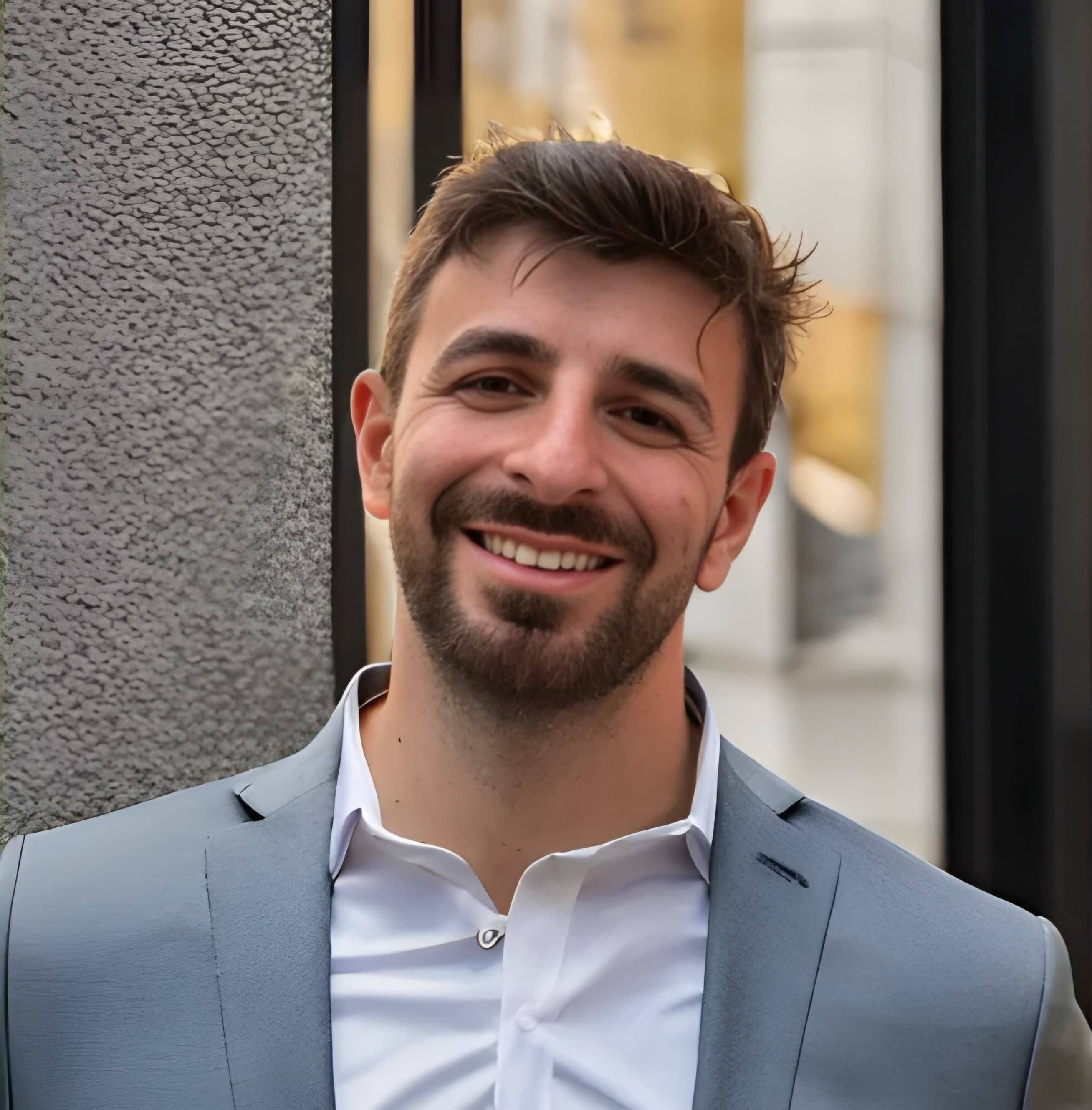
About Hamit Ekşi
Co-Founder & Legal Counsel
Attorney at law, Istanbul Bar Association
Born in 1990 in Istanbul, Hamit graduated from Istanbul University Faculty of Law. After practicing as a lawyer, he moved to the US for his MBA at San Diego State University (2017-2018), where the foundations of SimplyTR were laid. He specializes in the legal intricacies of citizenship and property law.
Related articles


🌍 Read in Your Language
Subscribe to our Newsletter
Get the latest updates on Turkish real estate market and citizenship programs.